In the morning, we ate breakfast. I bring this up specifically because it was with other medical students, other dental students, other public health students, other undergraduate students, other dentists, other doctors, and community health workers. We all came together every day over a shared meal. Looking at each other, interacting with each other, knowing that what we’re working for and who we’re working with is central to all this. It’s not just one person or from one field; it’s a collaboration between so many people. To me, that was very special. We didn’t directly say this every morning, but it’s the feeling I got.
After that, we went to pick up some more community health workers. A lot of this project was very focused on allowing the communities themselves to put out these interventions—and with the community—because they have more credibility. They have the knowledge, they have the dedication, they have the wisdom, and they’re able to connect. They speak the Kichwa language where sometimes it’s harder for us. We know some Spanish, and we can get by someone, but it’s not their primary language. After we picked them up, we drove to anywhere between one to three indigenous communities per day.
At these communities, we focused on tooth decay and malnutrition prevention through community education techniques that could, hopefully, support sustained behavioral change. What I mean by that is something as simple as storytime. Having a children’s book where they’re describing an interesting story, but the plot focuses around how one takes care of himself and one doesn’t, and the negative consequences that can result by eating a ton of sugar, or not brushing your teeth, or eating junk food, whatever it is. They were able to be very engaged with it and, hopefully, take away something like, “Oh no, I want to be like this kid who is able to play sports, who is able to sleep properly, eat properly, and play with his classmates.” That was our take on wanting them to get this message, even if it’s just unconsciously.
Then, there was a “How-To” station: how to eat properly, how to brush your teeth properly, how many times to brush your teeth properly, how many times per day. We showed images of healthy and unhealthy teeth. They’re smart individuals. They could, even at three, four, five years old, realize that this is unhealthy. This is a disease, and we don’t want that.
I taught them how to counter that. We interview the mothers because I think working with children six and under is great, but it takes the whole family to change, not just an individual. So we’re working with the mothers, interviewing them, and discussing habits—healthy and unhealthy habits—and how to ameliorate the negative effects of poor oral hygiene and poor nutrition. Then playtime, which is to keep the kids engaged. They’re at school. They’re rowdy, and they see a bunch of people and want to play. So, it’s just playing games with them.
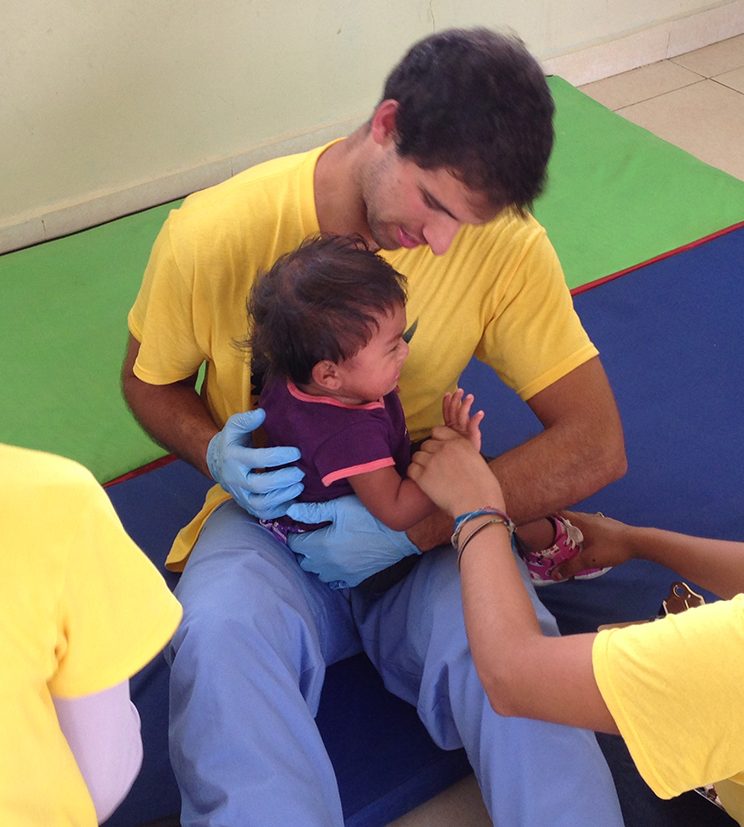
The dentists themselves put fluoride varnish on every single child’s teeth. Fluoride varnish remineralizes the teeth, strengthens them, and basically protects them from cavities or other oral diseases. a. We did this again as a preventative measure, so they hopefully won’t develop severe decay and nerve problems, everything else that goes with mouth pain and dental caries.
Then, we additionally caught the data because we want to take this to the next level, and right now, we’re analyzing the data. We analyzed it after the project, and we continue to analyze it now. Most of these activities were carried out by the community health workers themselves. We were more so a passive role, and we wanted them to take the lead. We were doing what we were told as we think that this is going to lead to something more sustainable.